Sharp rise in domestic tourism spurs spending Data also shows growth among rural residents and short
· 2026-06-12 08:11:23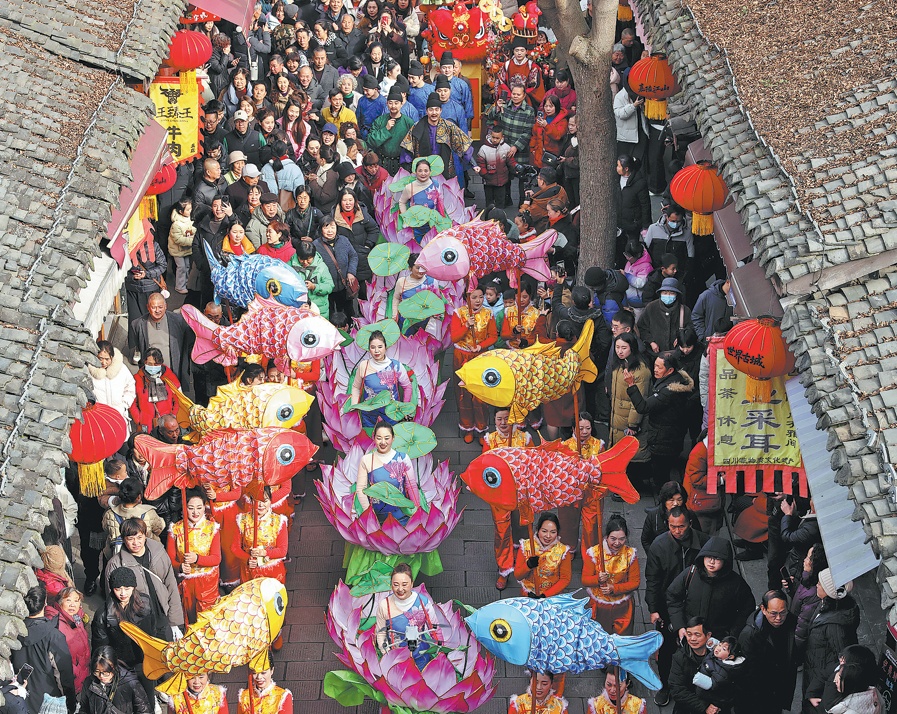
Performers carrying intricate fish lanterns and 渭南公交新闻网首页查询showcasing lotus ships parade through the streets of the Langzhong ancient town in Sichuan province on Monday. The performance depicts koi fish swimming in waters, which symbolizes prosperity and abundance. Zhang Lang/China News Service
China's domestic tourism continued a strong recovery in 2025, with the number of trips made by residents rising 16.2 percent year-on-year to more than 6.5 billion, according to the latest sampling survey data released on Monday.
The total number of domestic tourist trips reached 6.522 billion in 2025, an increase of 907 million trips from the previous year, according to data from the Ministry of Culture and Tourism.
Tourists spent a total of 6.3 trillion yuan ($906 billion) on domestic travel, up 9.5 percent from 2024. The annual increase in tourism expenditure amounted to 550 billion yuan.
Data showed accelerated growth in tourism activity among rural residents. Trips made by urban residents totaled 4.996 billion, up 14.3 percent year-on-year. In contrast, trips made by rural residents surged 22.6 percent to 1.526 billion.
Spending patterns followed a similar trend. Tourism expenditure by urban residents rose 7.5 percent to 5.30 trillion yuan, while spending by rural residents climbed 21.4 percent to 1 trillion yuan.
Lyu Ning, dean of the School of Tourism Sciences at Beijing International Studies University, said three main factors drove the surge in domestic trips: a booming holiday economy, deeper integration of tourism with culture and sports that has created new experiences, as well as effective pro-consumption policies.
"Travel is evolving from simple leisure to a vital source of happiness and emotional value," Lyu said. "Crucially, it is now strategically positioned as both a 'happiness industry' for improving quality of life and a 'livelihood industry' serving public welfare, highlighting its more essential place in modern life."
The significantly higher growth rates in trips and spending among rural residents reflect the sector's pivotal role in rural vitalization, she said.
On one hand, years of tourism-driven poverty alleviation and rural development have substantially improved infrastructure and on the other, strong urban demand for rural culture and immersive micro-vacations aligns with enhanced rural supply. These developments highlight how rural areas are shifting from being sources of tourists to becoming key consumption destinations, forming a new pattern of mutual benefit between urban and rural areas, Lyu said.
Lyu added that the contrast between rapid growth and total spending does not indicate "consumption downgrading", but rather maturing demand.
"This suggests China's tourism sector is transitioning from high-speed growth to high-quality development," she said.
She attributed the trend to more rational consumer behavior and structural changes in supply. Affordable, high-quality options such as short-distance and county-level travel are increasing, diluting per-capita spending. At the same time, consumption is expanding from tickets and hotels to local cultural experiences. Enhanced public cultural services, such as free museum access, also generate significant social value that is not fully captured in spending data, said Lyu.
Yin Ping, a professor at Beijing Jiaotong University's School of Economics and Management, said the significant increase in tourist trips in 2025 was driven by national policy stimulus, an improved tourism environment, more diversified destinations and, fundamentally, rising demand from travelers.
"Whether viewed through Maslow's hierarchy of needs or China's focus on high-quality development and better living standards, tourism plays an important role," Yin said. "It is not just about relaxation, but about seeing the world, understanding others and ultimately understanding oneself. It is an industry that invests in people."
Like Lyu, Yin also cautioned against interpreting slower growth in total spending relative to trips as a sign of weakening consumption.
She cited two main reasons: travelers are becoming more rational and value-conscious rather than focusing solely on top-tier attractions or hotels, and travel patterns are shifting toward nearby destinations and short trips.
In addition, improved transportation, such as high-speed rail, reduces travel time and may shorten stays, lowering accommodation spending. Enhanced public services also support new forms of travel, such as recreational vehicle and tent camping, altering traditional consumption patterns.
"This is not a negative outcome,"Yin said. "It reflects an overall increase in total welfare."
She added that tourism's impact extends beyond direct revenue. "It has a multiplier effect, stimulating the broader industrial and value chain, expanding domestic demand, creating jobs and facilitating the flow of information and capital."
文章推荐:
慧荣为PCIe 6.0 SSD研发新主控:速度将超30GB/s
iPad Air将搭载M3处理器:8G内存支持Apple Intelligence